
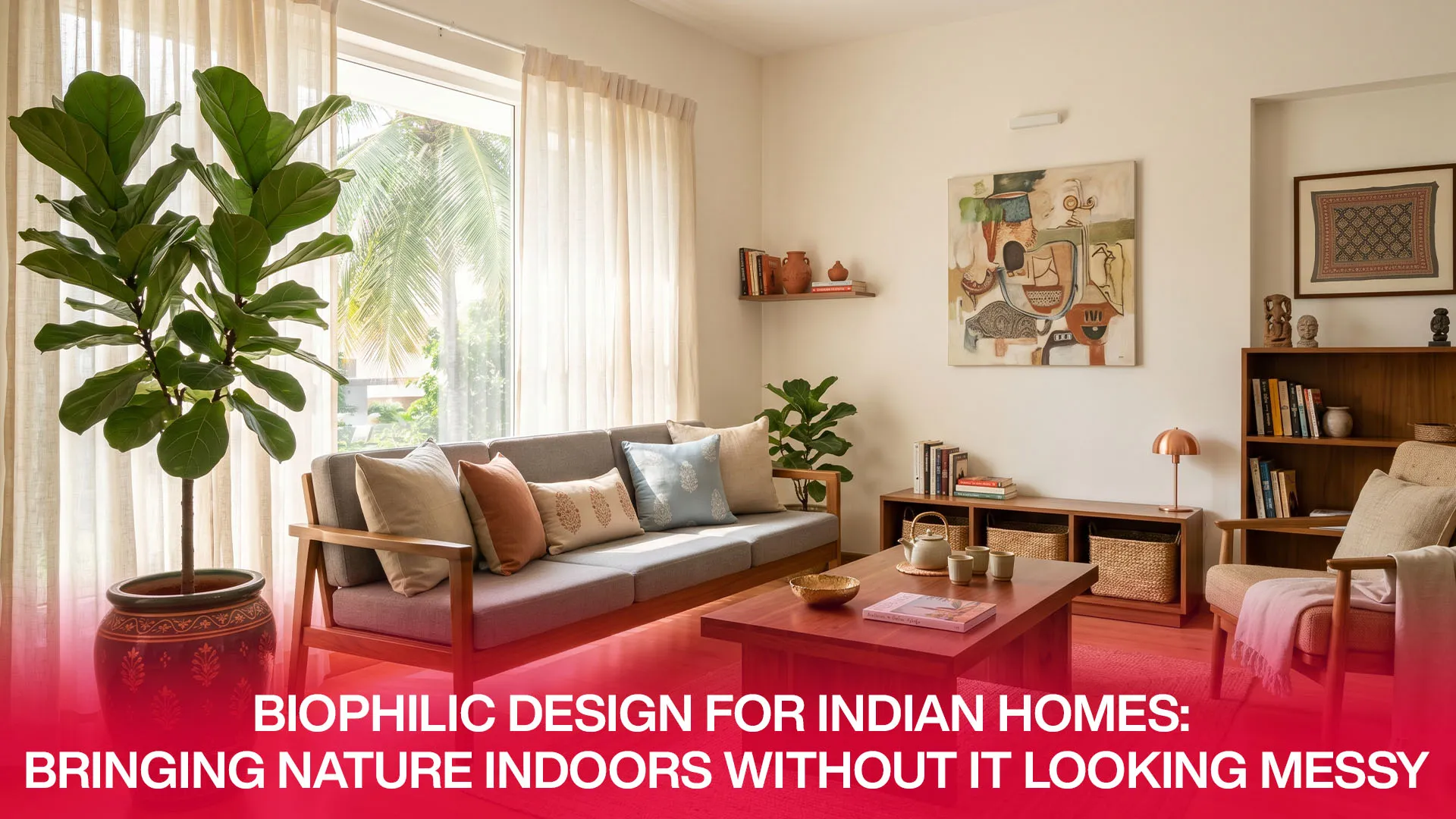
There is a reason you feel instantly calmer walking into a home that has plants, natural wood, and soft earthy textures. It is not just aesthetics. It is biology. Humans are hardwired to feel better in spaces that connect them to nature, and biophilic interior design for Indian homes is built entirely around that idea. The problem is, most people hear “bring nature indoors” and immediately picture a chaotic jungle of potted plants and home that looks like it belongs in a forest documentary rather than a modern Bangalore apartment.
The good news is that biophilic design done well looks nothing like that. It is clean, intentional, and genuinely beautiful. This blog tells you exactly how to get it right without your home ever looking messy or overdone.
What is Biophilic Design and Why Is It Perfect for Indian Homes?
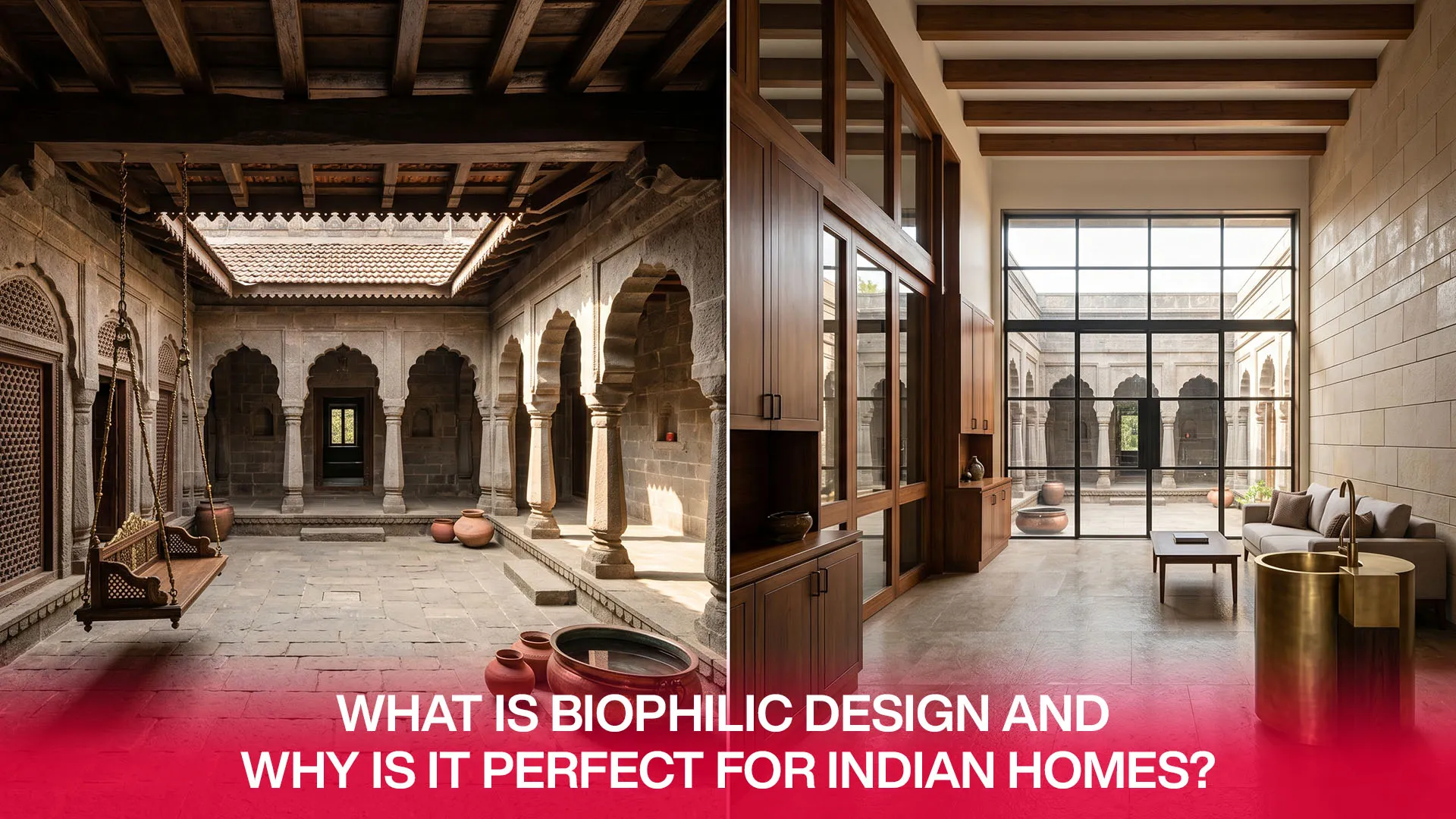
Biophilic design is the practice of incorporating natural elements into built spaces to improve wellbeing, reduce stress, and create a sense of calm. For Indian homes specifically, biophilic interior design for Indian homes is not a foreign concept at all. Traditional Indian architecture was always deeply connected to nature. Courtyards brought in light and air. Jali screens filtered sunlight. Terracotta, stone, and wood were the default materials.
What makes biophilic interior design for Indian homes so compelling today is that it works across all scales. Whether you live in a compact 2BHK in Koramangala or a spacious villa in Sarjapur, nature-inspired home decor india designers recommend can be adapted to your space, your budget, and your lifestyle without compromising on a clean, polished look.
How to Add Plants Without Making it Look Messy
This is the question almost everyone asks first and it is the right one to start with. The reason plant-heavy interiors look chaotic is not the plants themselves. It is placement without intention.
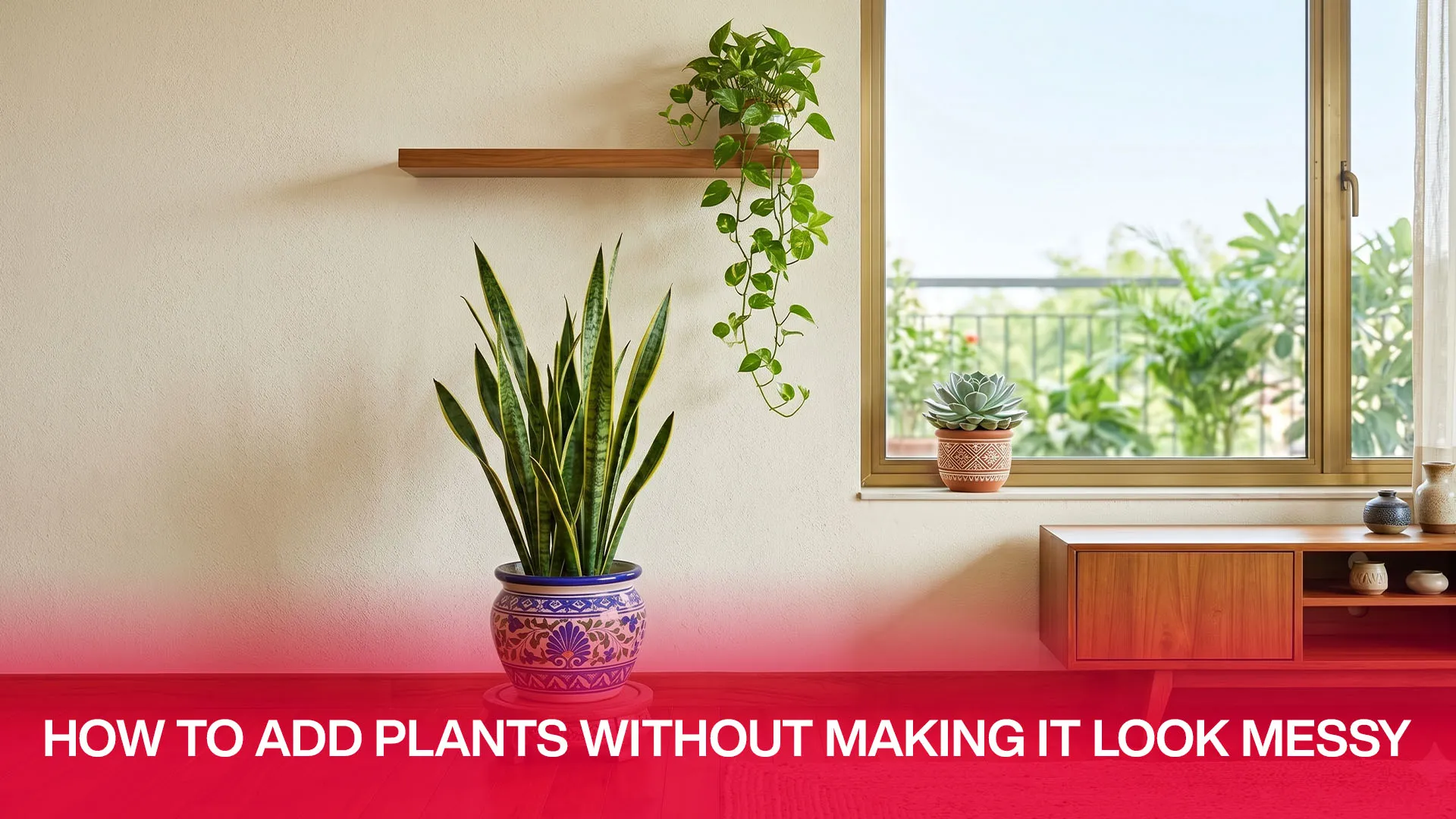
Fewer plants placed well always beats more plants placed randomly. Here is the principle that changes everything and is the foundation of knowing how to add plants to home interior design in a way that looks clean and intentional. One large statement plant in a corner, a trailing plant on a high shelf, or a small cluster of three plants on a windowsill creates a deliberate visual moment. Twenty plants scattered across every surface creates visual noise.
This is the full picture of how to add plants to home interior design without it ever tipping into clutter. Always think in terms of purpose and scale. A large fiddle leaf fig creates structure in a living room. A pothos trailing from a shelf adds softness without demanding attention. Each plant should have a clear area for where it is.
The Best Indoor Plants for Every Room in an Indian Home
Indian homes come with specific conditions that not every plant handles well. High humidity in bathrooms, low light in interior rooms, and the reality that most working households cannot maintain a daily plant care routine. Choosing the right plant for the right room solves all of this.
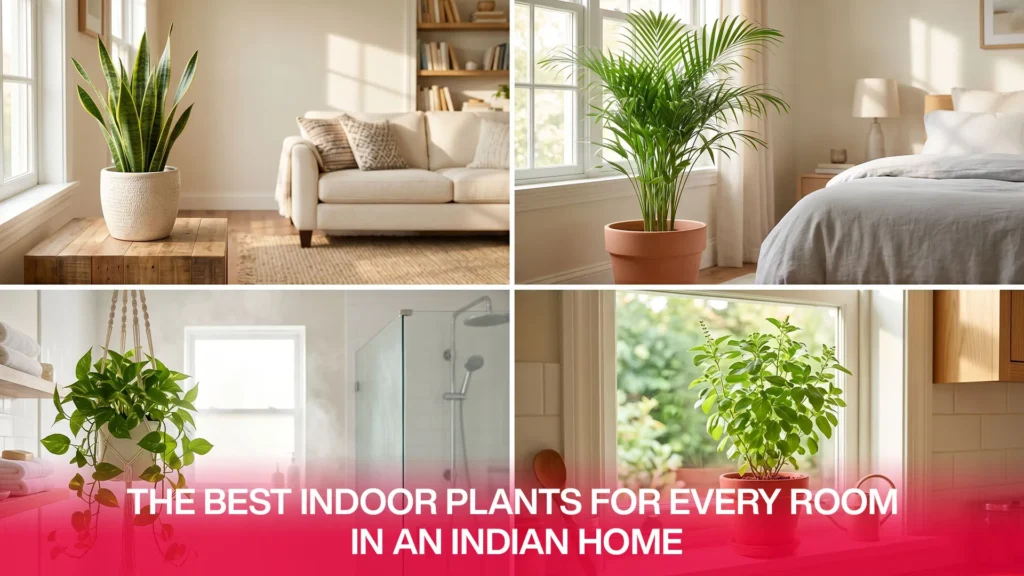
For indoor plants for living room India conditions, the snake plant, peace lily, rubber plant, and bird of paradise all work exceptionally well. They handle indirect light, require minimal watering, and add strong visual presence. The right selection of indoor plants for living room India spaces also extends beautifully to bedrooms. Lavender, areca palm, and spider plants are ideal there, improving air quality and creating a restful atmosphere.
For bathrooms, pothos and peace lilies thrive in the humidity. For kitchens, herbs like tulsi, mint, and curry leaf on the windowsill are both functional and visually fresh. The key is always choosing plants that work with your actual lifestyle, not the idealised version of it.
Natural Materials Done Right
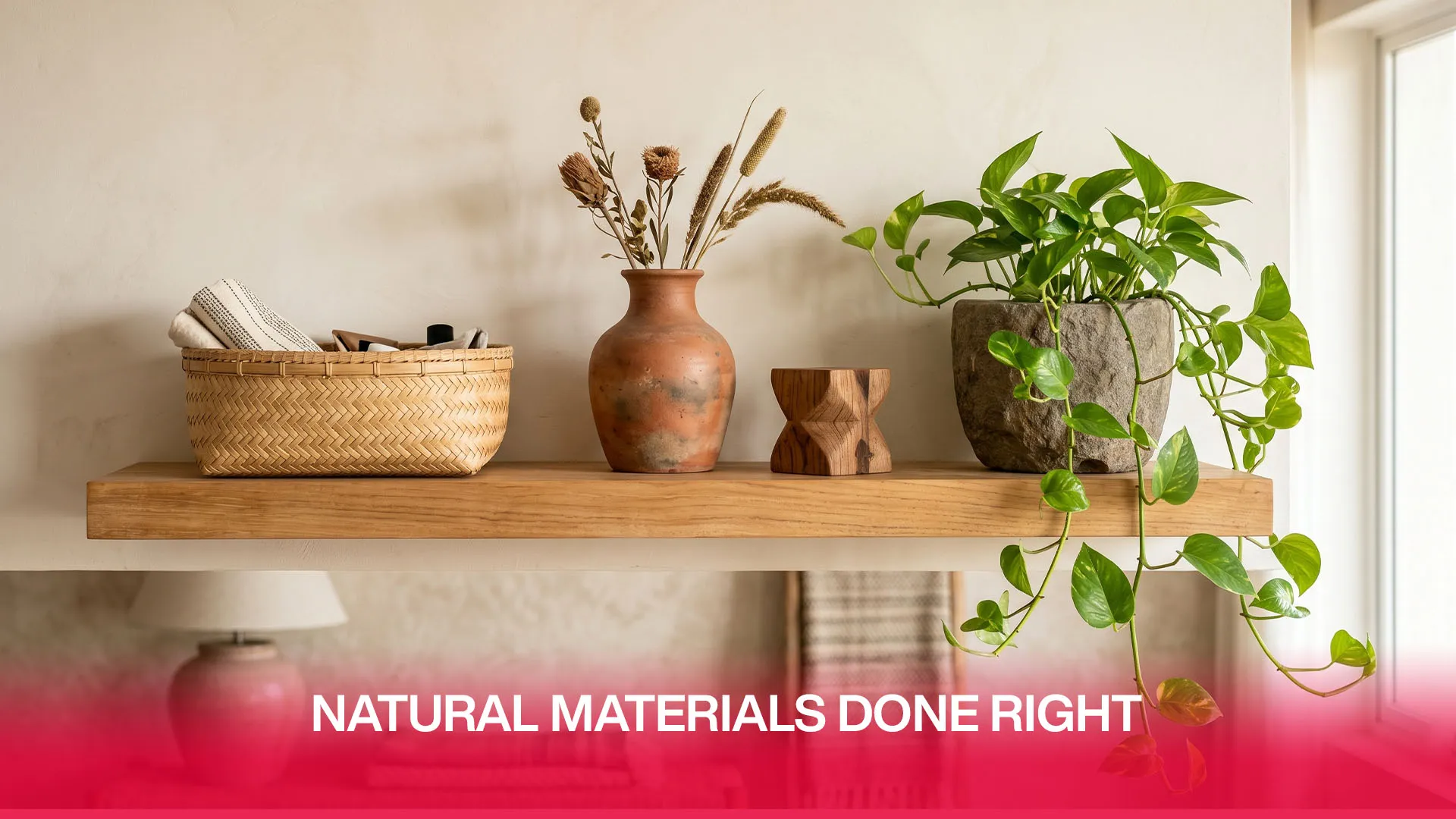
Plants are only one layer of biophilic design. Natural materials in interior design India designers now incorporate include wood, stone, cane, bamboo, terracotta, and jute. Understanding how natural materials in Interior design India homes absorb and reflect light within different pairings is what separates a considered biophilic interior from one that looks unfinished.
When done right, biophilic interior design for Indian homes using natural materials reads modern and refined, not rustic. Raw wood with a matte finish on wardrobes is a perfect example. A cane accent chair against a white wall looks elegant. Terracotta pots grouped with intention on a shelf look considered and stylish. The combination that works best is one dominant natural material paired with clean, neutral finishes. Wood with white. Stone with warm grey. Cane with cream. The natural element stands out without competing with everything else in the room.
Biophilic Design Ideas for Small Apartments
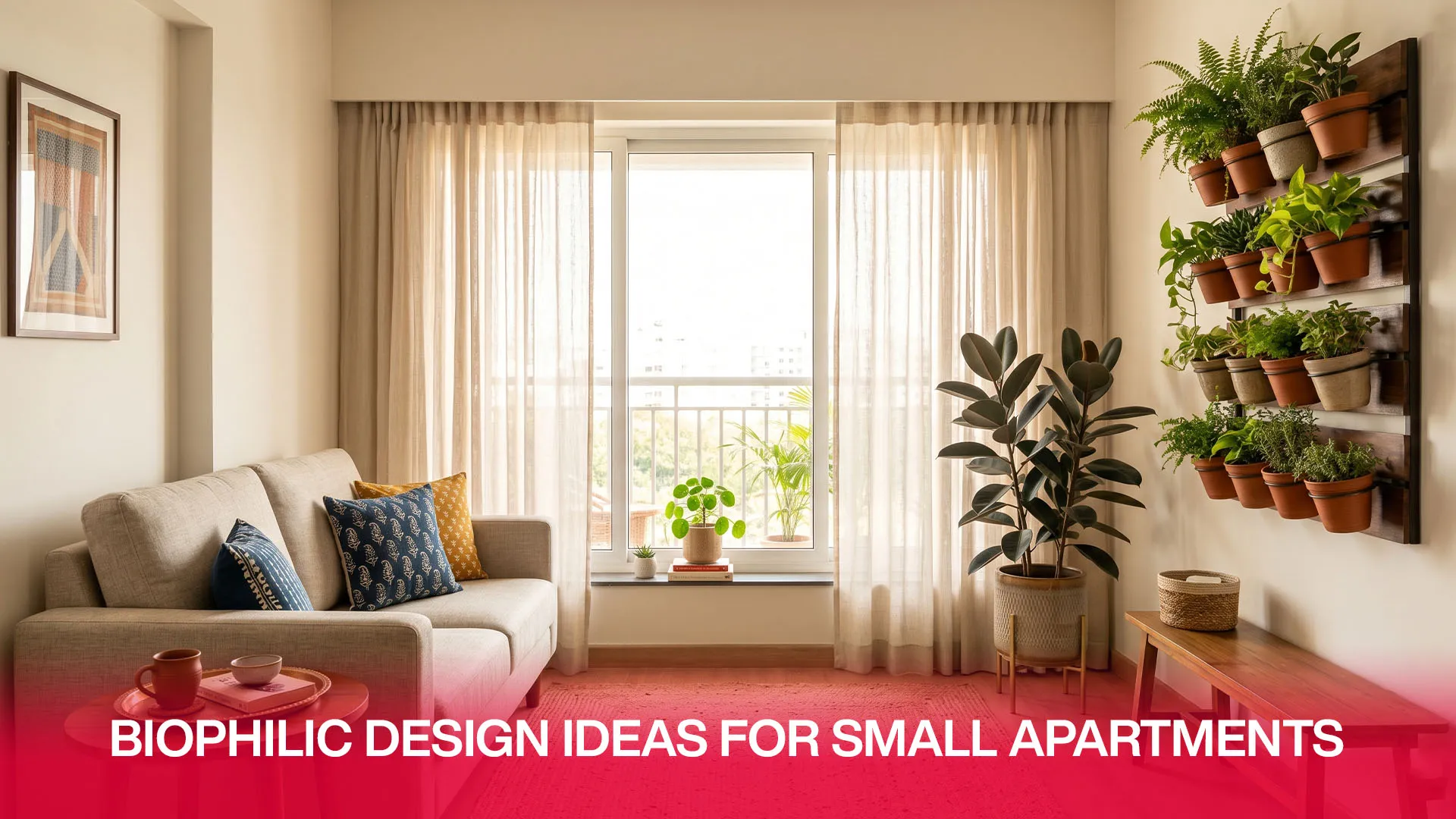
If you live in a compact flat, you might think biophilic design requires space you simply do not have. That is not the case. Some of the most effective biophilic design ideas for small apartments use the constraints of a smaller space to their advantage.
Vertical gardens or wall-mounted planters turn an unused wall into a living feature without touching floor space. Large windows kept completely unobstructed to maximise natural light, which is one of the most powerful biophilic elements of all. In compact homes, biophilic design ideas for small apartments work best when every natural element does more than one job. A wooden floating shelf stores things and brings warmth. A trailing plant adds greenery and draws the eye upward, making the room feel taller.
Green Interior Design in Bangalore- What the City Is Embracing
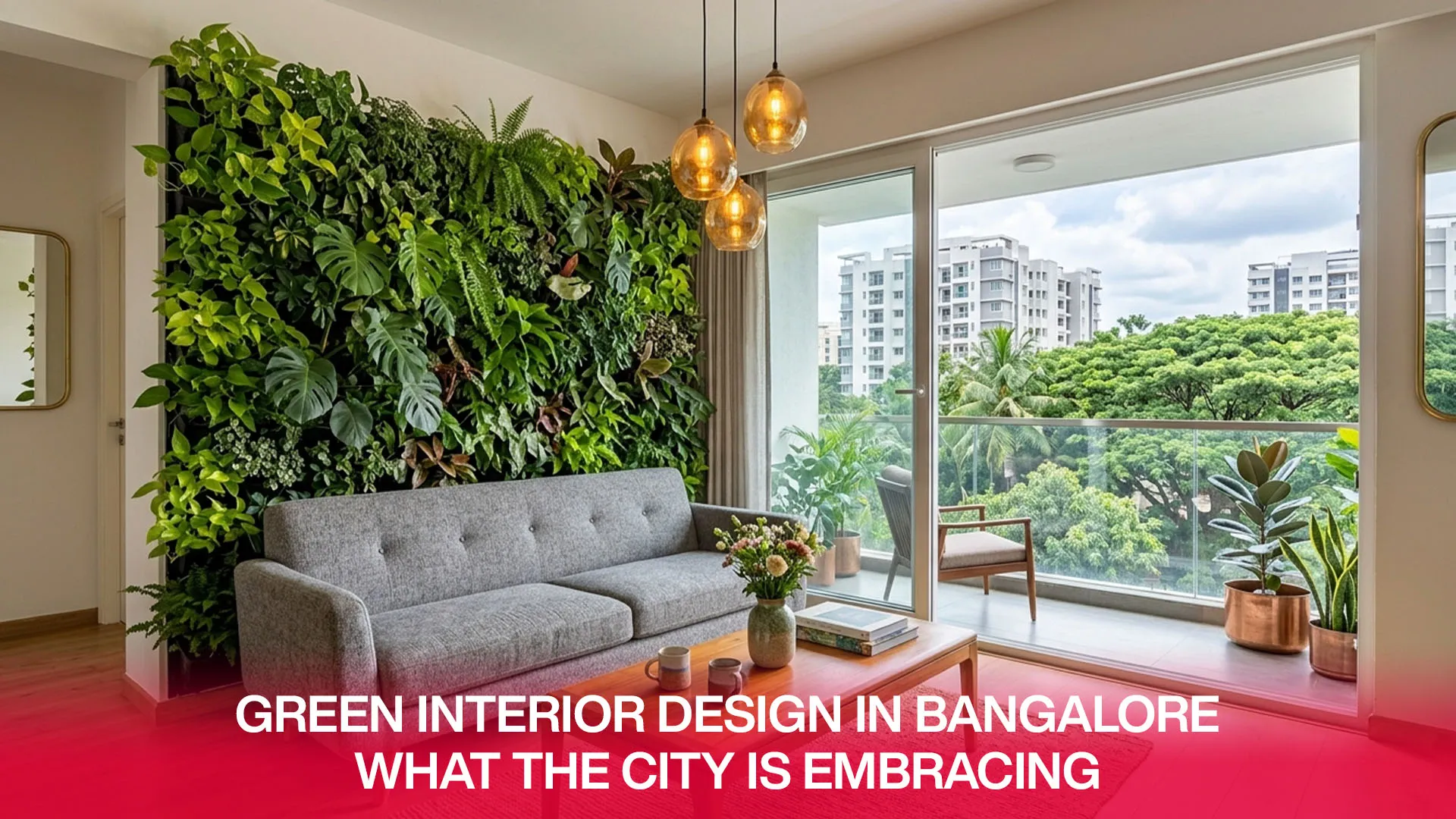
Bangalore has seen a significant shift toward green interior design Bangalore homeowners are actively requesting. The city’s mild climate means plants thrive indoors with minimal care. The large tech-working population that spends long hours at screens has a strong appetite for spaces that feel restorative and calm.
Studios offering biophilic interior design for Indian homes in Bangalore are seeing growing demand for dedicated plant corners, natural material feature walls, and full green walls in living rooms. These are no longer niche requests. The green interior design Bangalore market is growing quickly and homeowners are budgeting for these elements intentionally.
At Mirainow, we have been incorporating biophilic elements into our projects across Bangalore for years. See how we approach biophilic interior design for Indian homes and how we make it work for your specific space.
Can Biophilic Design Work With Minimalist or Modern Interiors?
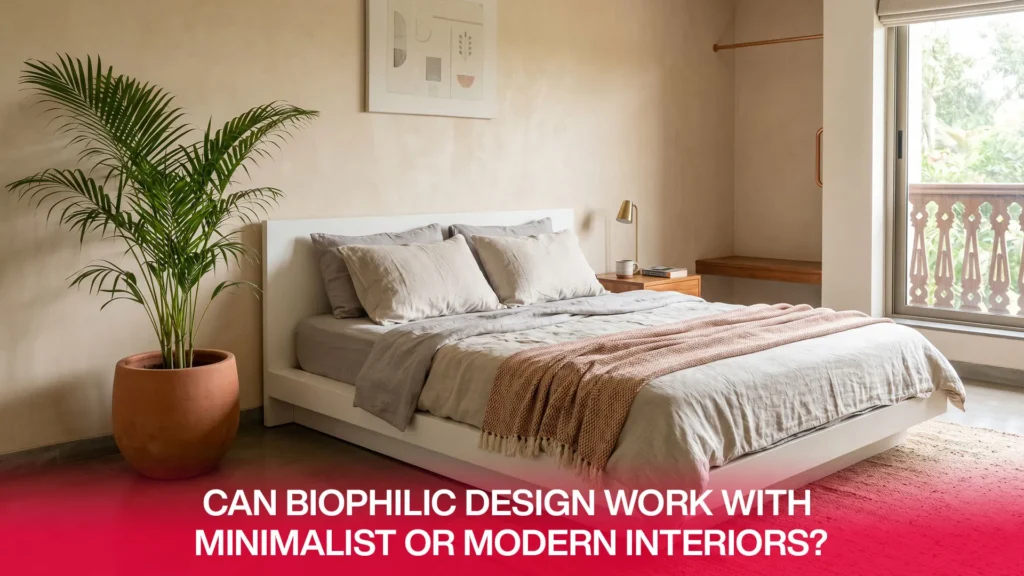
Absolutely, and in fact biophilic and minimalist design share the same core philosophy. Both prioritize intention over excess. Both value quality over quantity. The integration is entirely natural.
A minimalist white living room gains warmth from a single large plant and a wooden coffee table. A modern kitchen becomes more inviting with herbs on the windowsill and a stone countertop. A sleek bedroom becomes a sanctuary with an areca palm in the corner and linen bedding. Nature-inspired home decor India designers agree that the most successful biophilic interiors are subtle, considered, and woven in so naturally that you feel the difference before you can name it.
The goal with biophilic interior design for Indian homes is never to make your home look like a garden. It is to make it feel the way a garden makes you fell, Calm.Grounded. At ease. That is entirely achievable in any modern Indian home regardless of size, style, or budget.

Conclusion
Biophilic design is not a trend. It is a return to something we have always known, that spaces connected to nature simply feel better to live in. The only thing standing between most Indian homeowners and a beautifully biophilic home is the fear that it will look overdone. It will not, as long as the choices are intentional, the materials are considered, and the plants are placed with purpose.
Whether you want one large plant and a wooden accent piece or a full green wall and natural stone flooring, the approach scales to suit any home and any budget. The most important thing is starting with the right design partner who understands how to make it look effortlessly right. At Mirainow, we design homes across Bangalore built around how our clients actually want to feel when they walk through the door. If biophilic design is something you want to explore for your home, biophilic interior design for Indian homes is exactly where we can help you get started.
FAQs
Biophilic design is the practice of bringing natural elements like plants, natural materials, and organic textures into indoor spaces to improve wellbeing and create calm. It is absolutely suitable for compact Indian apartments. In fact, some of the most effective biophilic design ideas for small apartments make the space feel larger and more open, not more cluttered.
For living rooms, snake plants, rubber plants, and peace lilies work best. For bedrooms, areca palms, lavender, and spider plants are ideal. For bathrooms, pothos thrives in the humidity. For kitchens, herbs like tulsi and mint on the windowsill are both practical and visually fresh. Always choose plants suited to the light and humidity conditions of each specific room.
The key is pairing natural materials with clean lines and neutral finishes. Raw wood with matte finishes reads modern, not dated. Cane furniture against white walls looks elegant. Terracotta and stone work beautifully when they are the one focal material rather than competing with multiple others. One dominant natural material paired with a clean palette always looks considered and refined.
Not at all, as long as you choose the right plants. Snake plants, pothos, rubber plants, and ZZ plants require very minimal watering and thrive in typical Indian apartment conditions. Natural materials like wood, stone, and cane require standard cleaning and no special maintenance. The goal is always to choose elements that work with your actual lifestyle, not against it.
Yes, and it is one of the most natural combinations in interior design. Biophilic and minimalist design share the same core values of intention, quality, and calm. A single large plant, a wooden surface, and natural light can transform a minimalist space without adding visual clutter. The result is a home that feels both modern and deeply human at the same time.