
You found a designer you love. The portfolio looks incredible, the initial quote seems reasonable, and you are genuinely excited to get started. Then the final invoice arrives and it is nearly double what you expected. Sound familiar? Hidden costs in interior design are far more common than most homeowners realise, and in a city like Bangalore where the market is booming, knowing what to watch out for can save you significant money and stress.
This blog is not here to scare you away from hiring a designer. It is here to make sure you go in with your eyes wide open. Understanding what interior design services in Bangalore actually include, and what they quietly leave out, is the smartest thing you can do before signing anything. Think of it as your practical guide to the hidden charges in interior design that most studios hope you never think to ask about.
What Are You Actually Paying For?
Most people assume that when they hire a designer, everything is covered under one roof. The design, the materials, the labour, the furniture, all of it. In reality, that is rarely the case unless it is very clearly spelled out in the agreement.
Interior design service charges typically fall into a few broad categories. There is the design fee, which covers the creative work, planning, 3D visualisations, and project direction. Then there is the execution cost, which covers civil work, carpentry, painting, electrical, and installation. On top of that come material costs, furniture, and finishing touches like lighting and décor. The confusion starts because many designers quote only the design fee upfront. Everything else gets added later, often in ways that feel like a complete surprise.
The Hidden Charges Nobody Warns You About
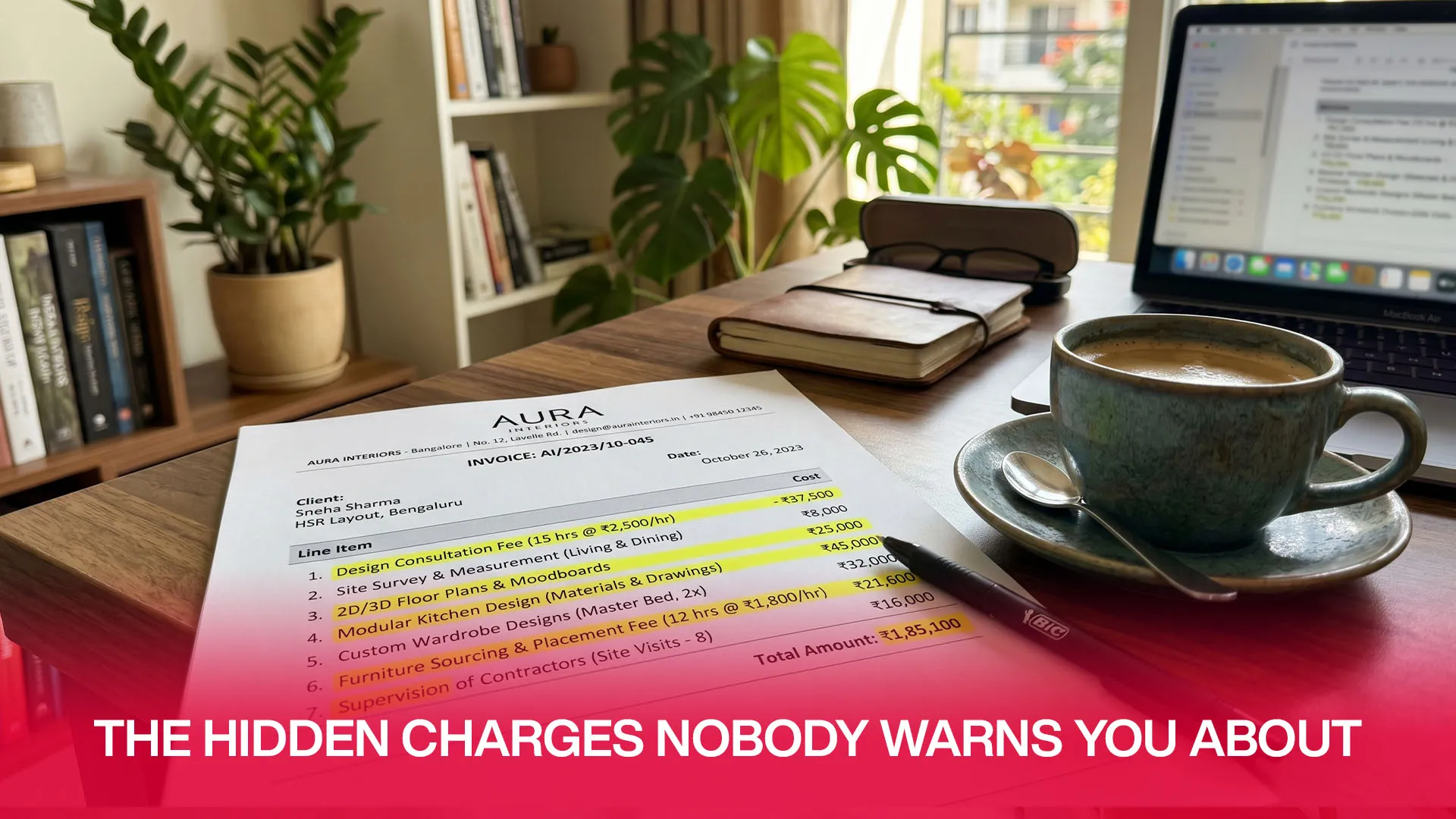
When homeowners research interior design services in Bangalore, the advertised numbers often look very appealing. What those numbers do not always include is what makes the final bill climb.
Some of the most common hidden charges in interior design projects include:
- Site visit charges billed after the first free visit
- Revision fees when you change your mind about a design element
- Supervision charges for the designer’s time spent on site during execution
- Transportation and logistics costs for moving materials and furniture
- GST at 18 percent, which adds a significant amount to every line item
- Wastage costs built into material estimates that rarely get explained upfront
- Procurement fees charged when studios source specific materials on your behalf
These are not always dishonest practices. Some of these charges are completely legitimate. But when they are not disclosed at the start, they become a serious problem. Understanding hidden charges in interior design before you commit is one of the most valuable things a homeowner can do. A good studio offering interior services in Bangalore will have no hesitation being fully transparent about every charge from day one.
Are Materials Included in Interior Design Costs?
This is one of the most important questions to settle early, and it directly shapes your home interior cost breakdown. The short answer is: sometimes, and it depends entirely on how the project is structured.
In a turnkey package, materials are typically included in the overall quote. The studio procures everything on your behalf and the cost is folded into the project price. In a design-only arrangement, materials are your responsibility to source. This can appear cheaper on paper but leaves room for surprises when you realise certain items cost far more than expected.
Your home interior cost breakdown will look very different depending on this one decision alone. Always clarify in writing whether materials are included, and if they are, ask for a line-by-line material list with approximate costs before giving the green light.
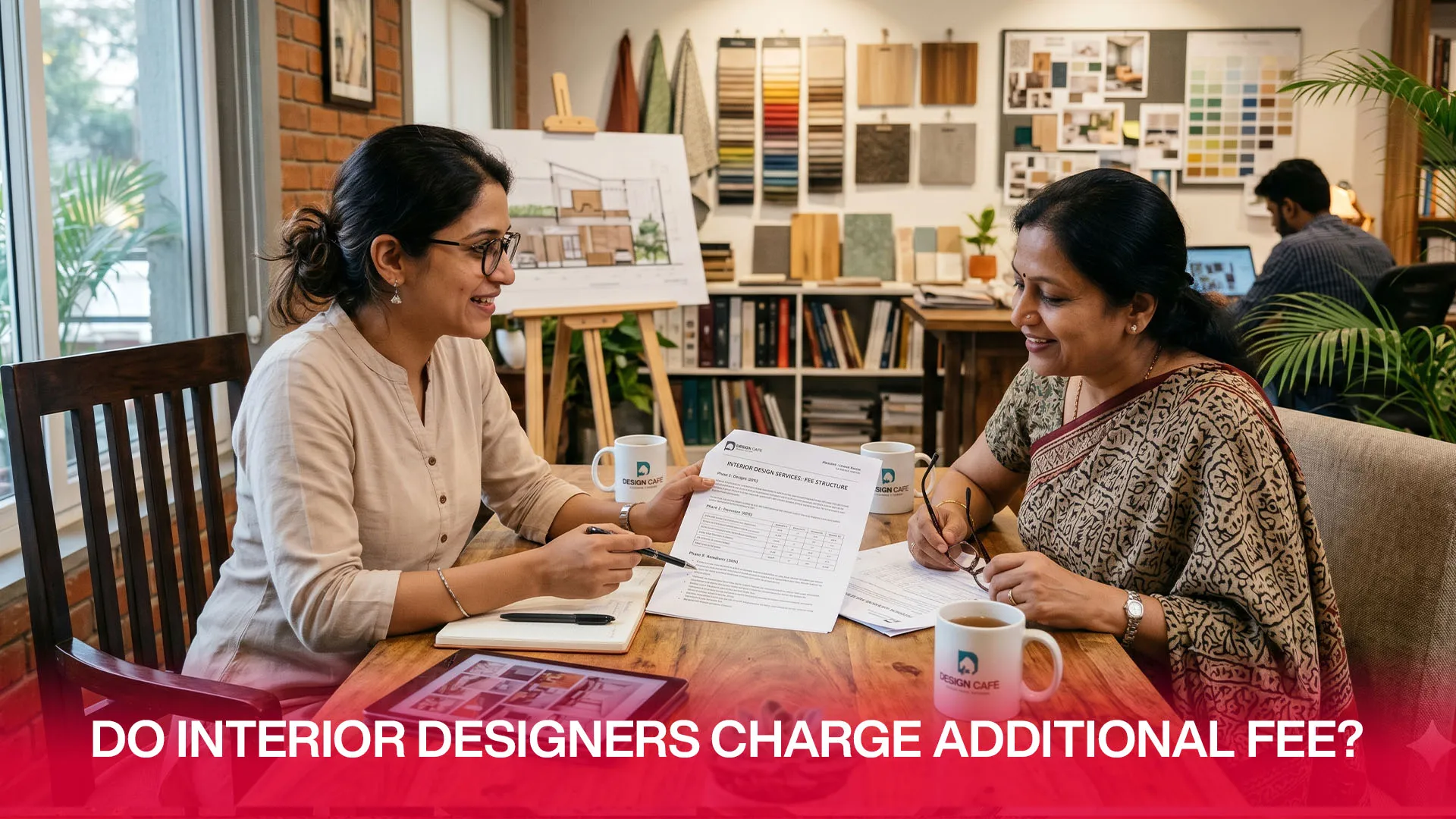
Do Interior Designers Charge Additional Fee?
Yes, and there is no reason to be alarmed as long as you know about them upfront. The important thing is knowing what they are before work begins. Interior design services in Bangalore vary widely in how studios structure their additional charges, and understanding this early protects you from difficult conversations later.
Some of the most common additional fees include:
- Design consultation fees for the initial meeting, waived by some studios and charged by others
- 3D rendering charges if detailed visualisations are not part of the base package
- Project management fees for studios that charge separately for overseeing execution
- Change order fees when the scope shifts mid-project, which happens more often than people expect
- Post-handover visit charges for addressing issues after completion
Any studio that dodges the question about additional charges is one you should think twice about before signing anything. The best interior design services in Bangalore will always put these in writing before a single nail goes into the wall.
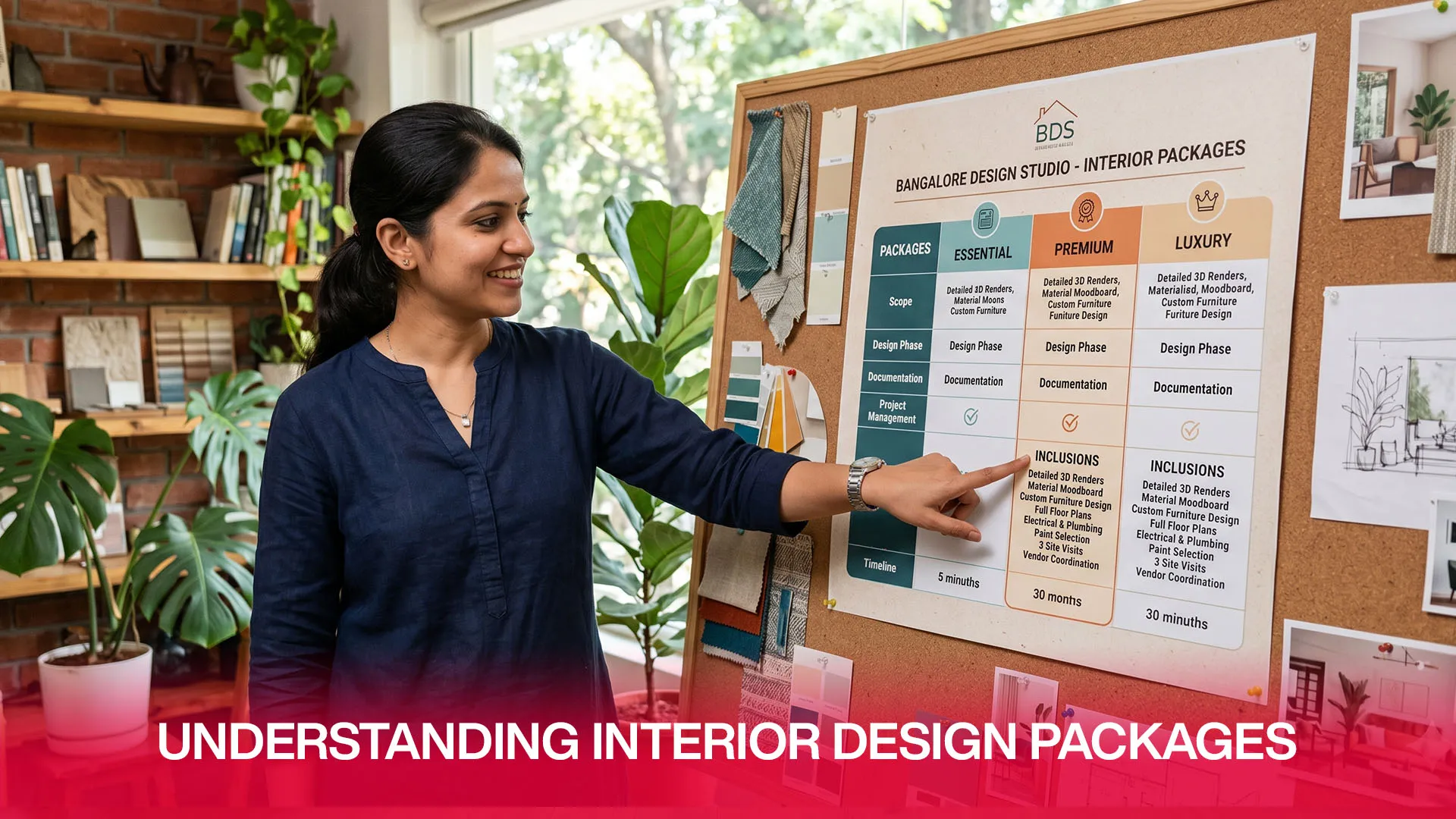
Understanding Interior Design Packages
One of the cleanest ways to avoid bill shock is to opt for a well-structured package from the start. Packages offered by interior design services in Bangalore come in several forms and understanding the difference matters more than most homeowners realise.
Modular-only packages cover kitchens, wardrobes, and TV units. These are fixed in scope and relatively predictable in cost. Full home packages include civil work all the way through to final décor. Turnkey packages go furthest, with the studio managing every aspect of the project from start to finish.
When comparing packages, always check three things: What is explicitly included. What is explicitly excluded. And what happens when something outside the scope comes up during execution, because it always does. A package that costs more upfront but includes everything is almost always better value than a cheaper one that quietly adds line items throughout the project.
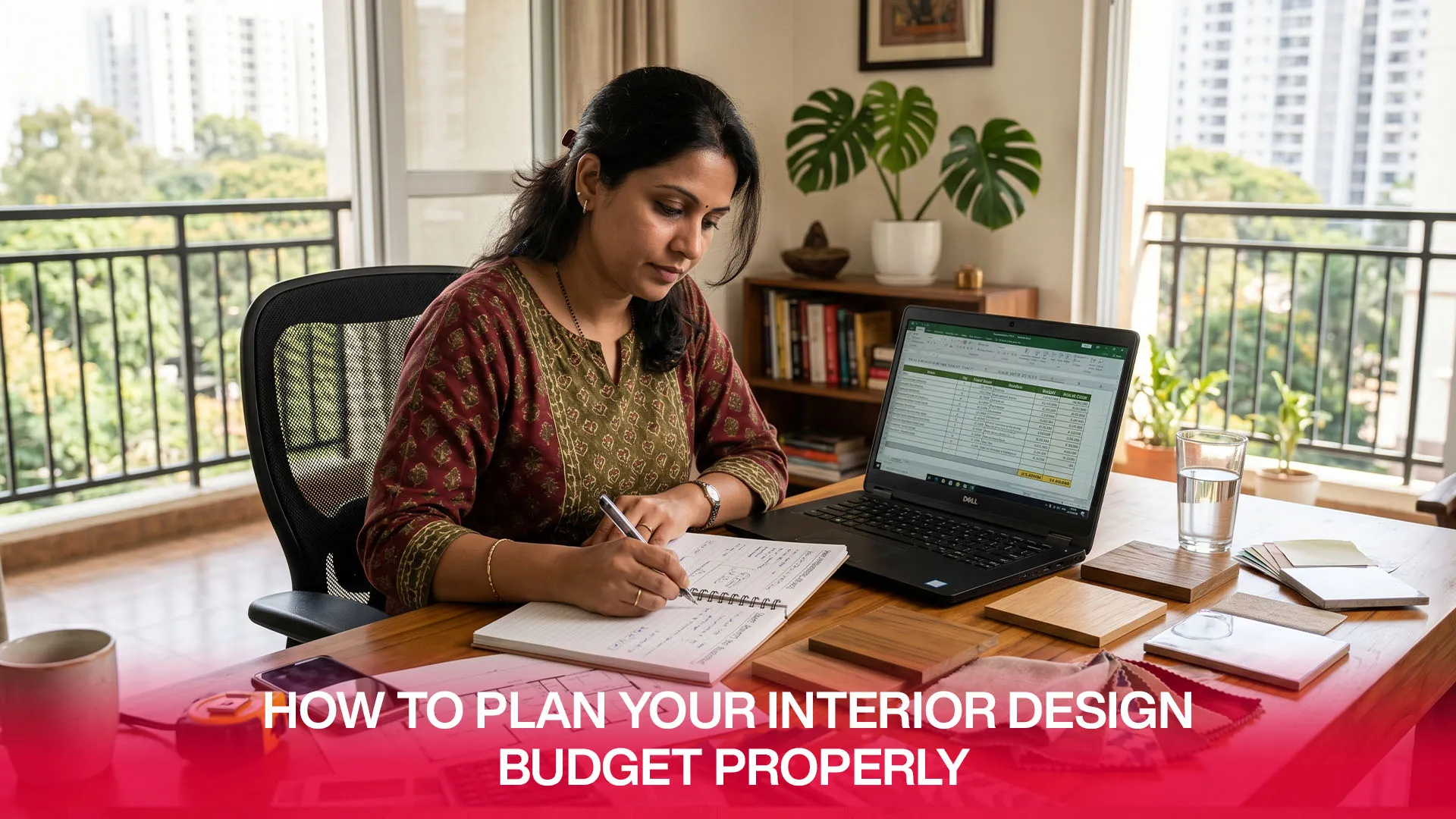
How to Plan Your Interior Design Budget Properly
Good interior design budget planning is not a task you do once and forget. It is about knowing where every rupee is going, understanding what could shift, and building in room for the unexpected.
Start with your total available budget. Set aside ten to fifteen percent as a contingency buffer for extra costs in interior projects. Do not let anyone convince you that buffer can be absorbed into the main scope, because costs in projects have a habit of appearing precisely when you least expect them.
From the remaining amount, map out your spending by room and by category, civil work, modular units, loose furniture, lighting, and décor. Use a reliable interior design pricing guide to sanity-check the numbers your studio presents. Revisit your interior design budget planning at every major decision point in the project, not just at the beginning. Seeing every category broken out keeps you in control and makes trade-offs far easier to manage.
How to Avoid Unexpected Interior Design Charges
When exploring interior design services in Bangalore, getting everything in writing is non-negotiable. A verbal agreement means nothing when a dispute arises. Every scope item, every material, and every additional charge should be documented in a signed agreement before any work begins.
The final piece of solid interior design budget planning is asking for a fully itemised quote rather than a single lump sum. A line-by-line breakdown is your most reliable interior design pricing guide and should be treated as a living reference document at every stage of the project.
Understand the revision policy before you sign. Changing your mind mid-project costs money, and many homeowners discover this far too late. Ask specifically what happens when unforeseen issues come up on site and who is responsible for absorbing that cost.
Finally, choose a studio that treats transparency as a minimum standard, not a selling point. Read reviews, speak to past clients, and pay close attention to how a studio communicates in that very first conversation. That early behaviour tells you everything you need to know about how they will behave when it actually matters. The right interior design services in Bangalore will never make asking questions feel like an inconvenience.

Conclusion
Hidden costs should never be the reason a dream home becomes a disappointment. When you truly understand what interior design services in Bangalore involve, from the design fee through to the final finishing touches, you are in a far stronger position to make decisions that are right for your home, your budget, and your peace of mind.
Ask the right questions. Read every agreement carefully. Choose a studio that puts transparency first. And remember, the best way to handle extra costs in interior projects is to plan for them before they happen, not scramble to cover them after the fact.
At Mirainow, we believe every homeowner deserves to know exactly where their money is going from day one. That is not just how we quote. It is how we work.
FAQs
Hidden costs in interior design typically include revision fees, site supervision charges, GST, material wastage costs, procurement fees, and transportation charges. These are legitimate in many cases but become a problem when they are not disclosed upfront.
Get a fully itemised quote in writing before work begins. Understand the revision policy, ask what happens when unforeseen issues arise on site, and confirm that GST and any supervision or procurement fees are accounted for in the estimate.
It depends on the project structure. In a turnkey package, materials are generally included. In a design-only arrangement, they are not. Always confirm this in writing along with a detailed material list and indicative costs, so your home interior cost breakdown is accurate from the start.
Yes, most do, and that is completely normal. Common additional fees include 3D rendering charges, change order fees, project management charges, and post-handover visit fees. A trustworthy studio will disclose all of these clearly in the initial agreement.
Start by defining your total available budget and setting aside ten to fifteen percent as a contingency buffer. Then break the remainder down by room and category. Use a reliable interior design pricing guide to cross-check the numbers your studio presents and revisit your interior design budget planning regularly throughout the project, not just at the start.